Where is the Moon?
A practice of seeing and feeling
We can think of the Moon as a being.
She is a clock to be experienced in real time.
She not only shows us what time it is, but what time actually IS.
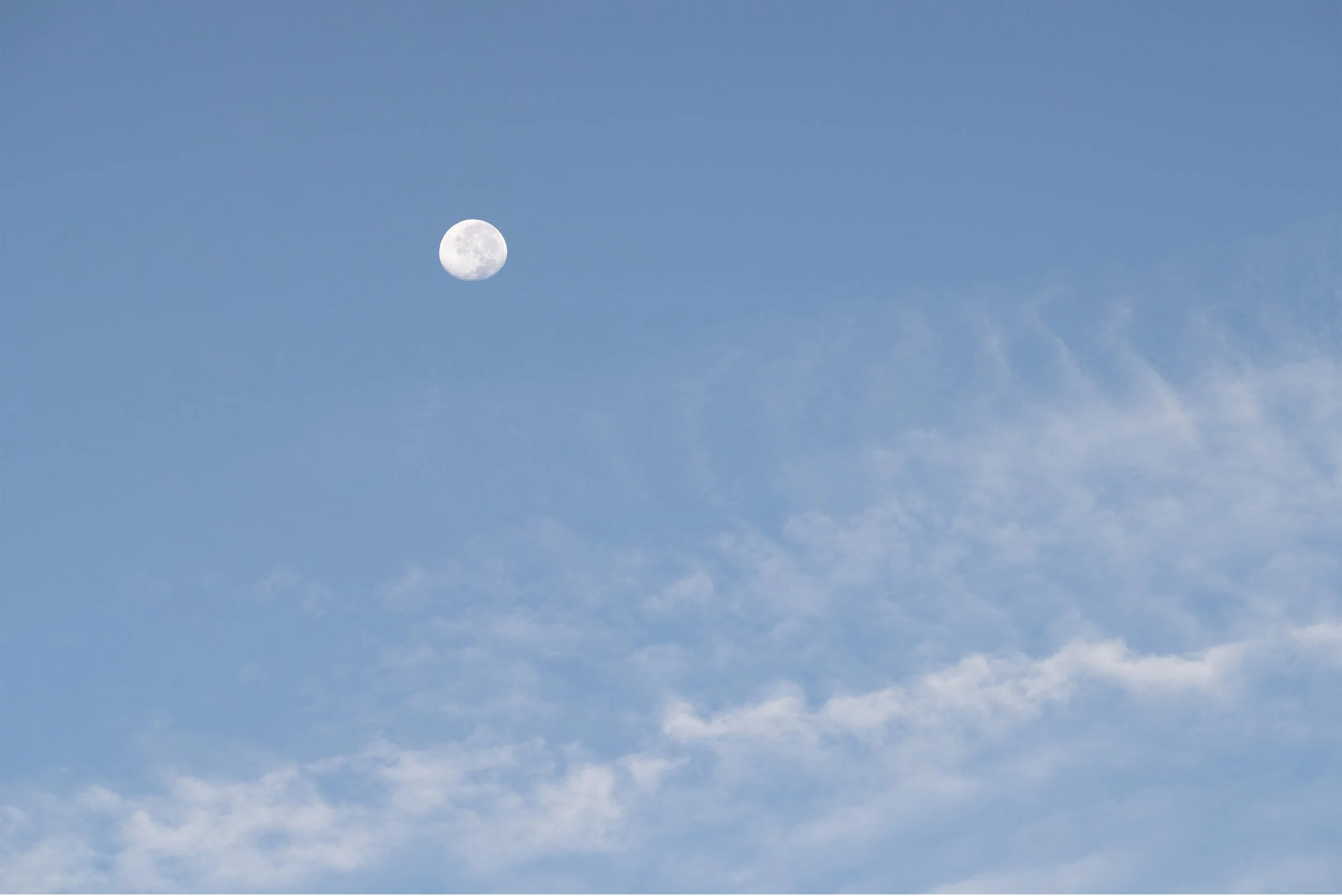
From the setting Sun she grows.
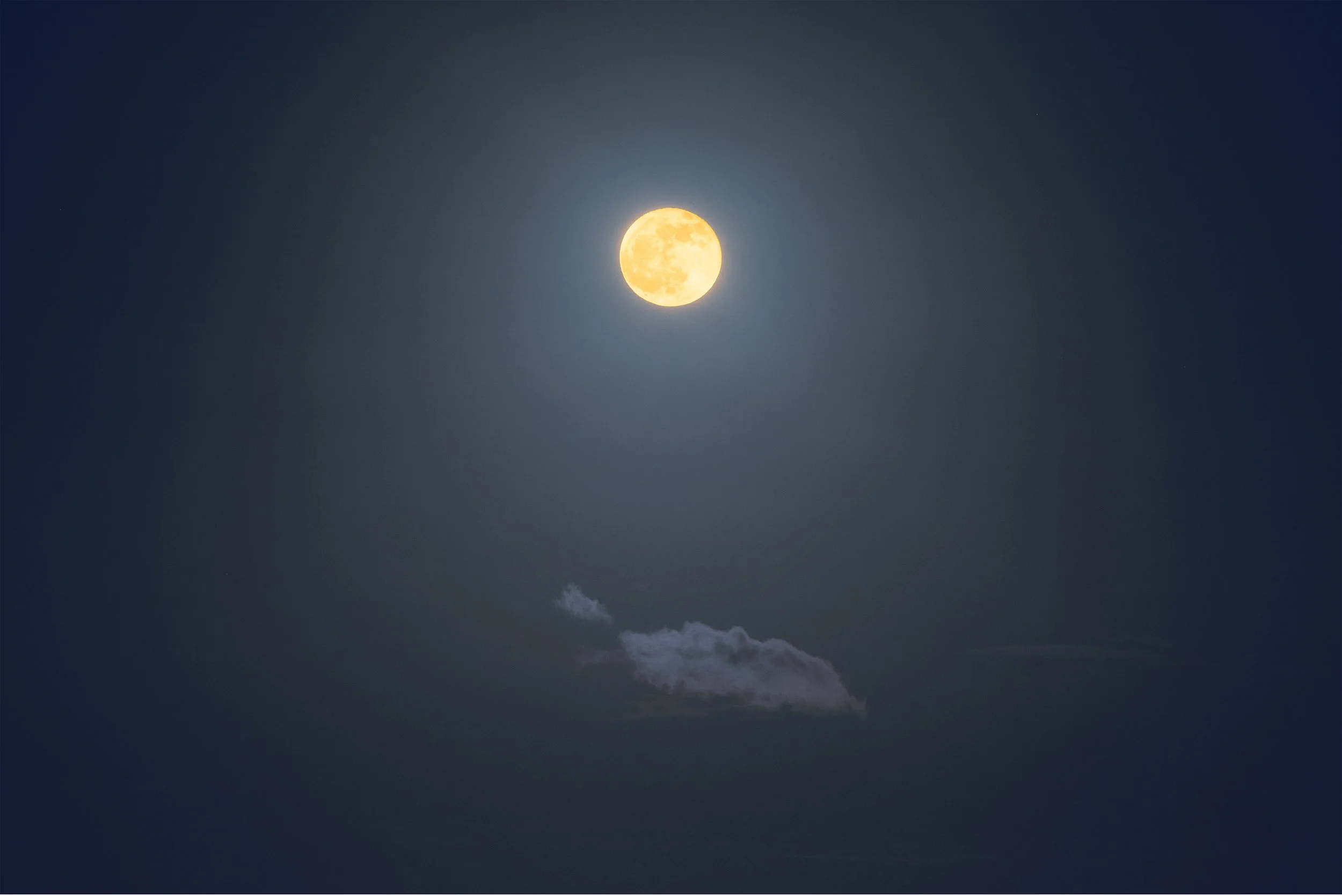
Into the fullness of night she reaches.
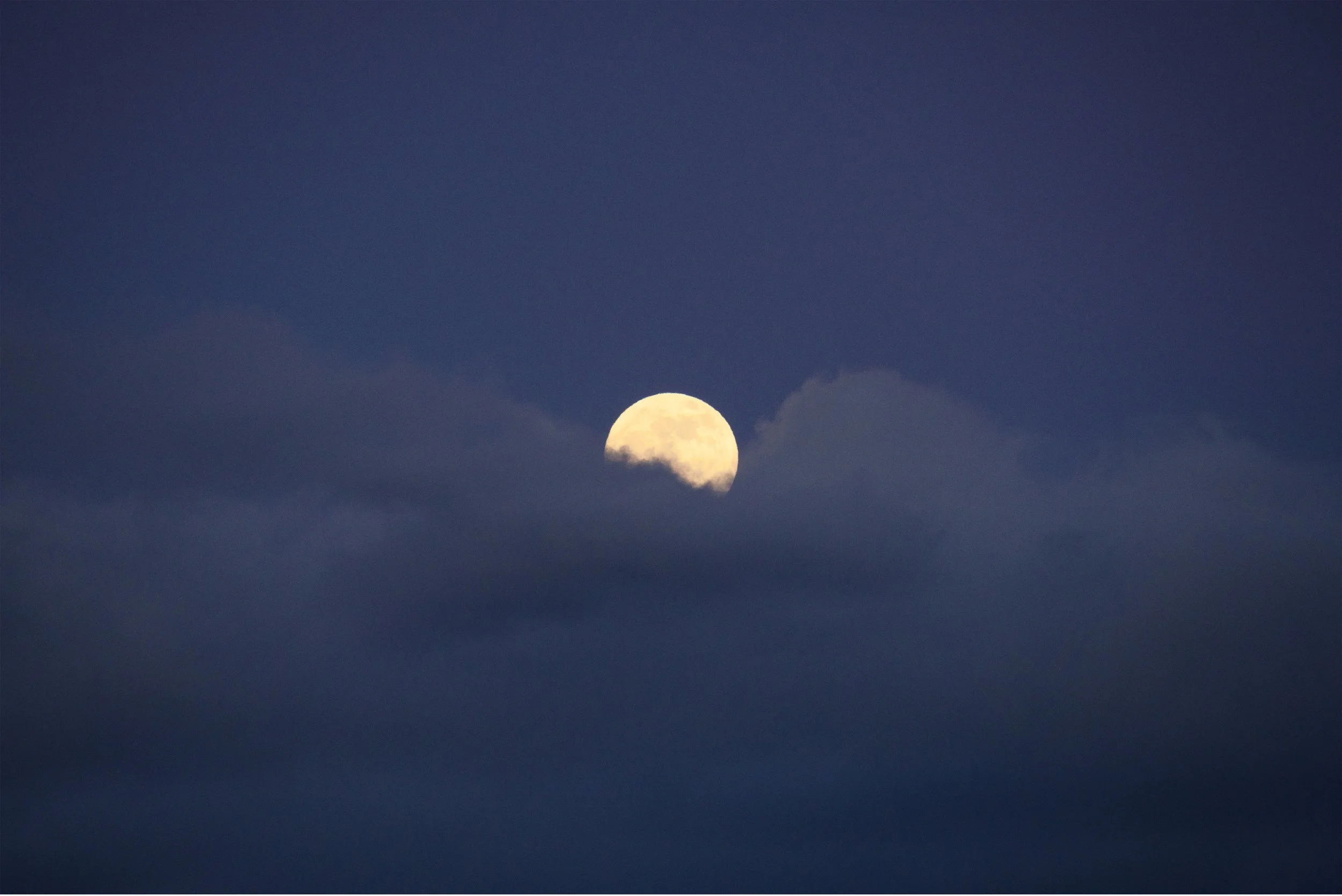
Into the rising Sun she completes.
She is waxing
From the ever important first night, we align with her growing. We see her grow further away from the setting Sun each night. She shows us that she is different. Her logic is different. It is counterintuitive to the logic of the Sun. She is the ideal balance to the practical flow of day and night.
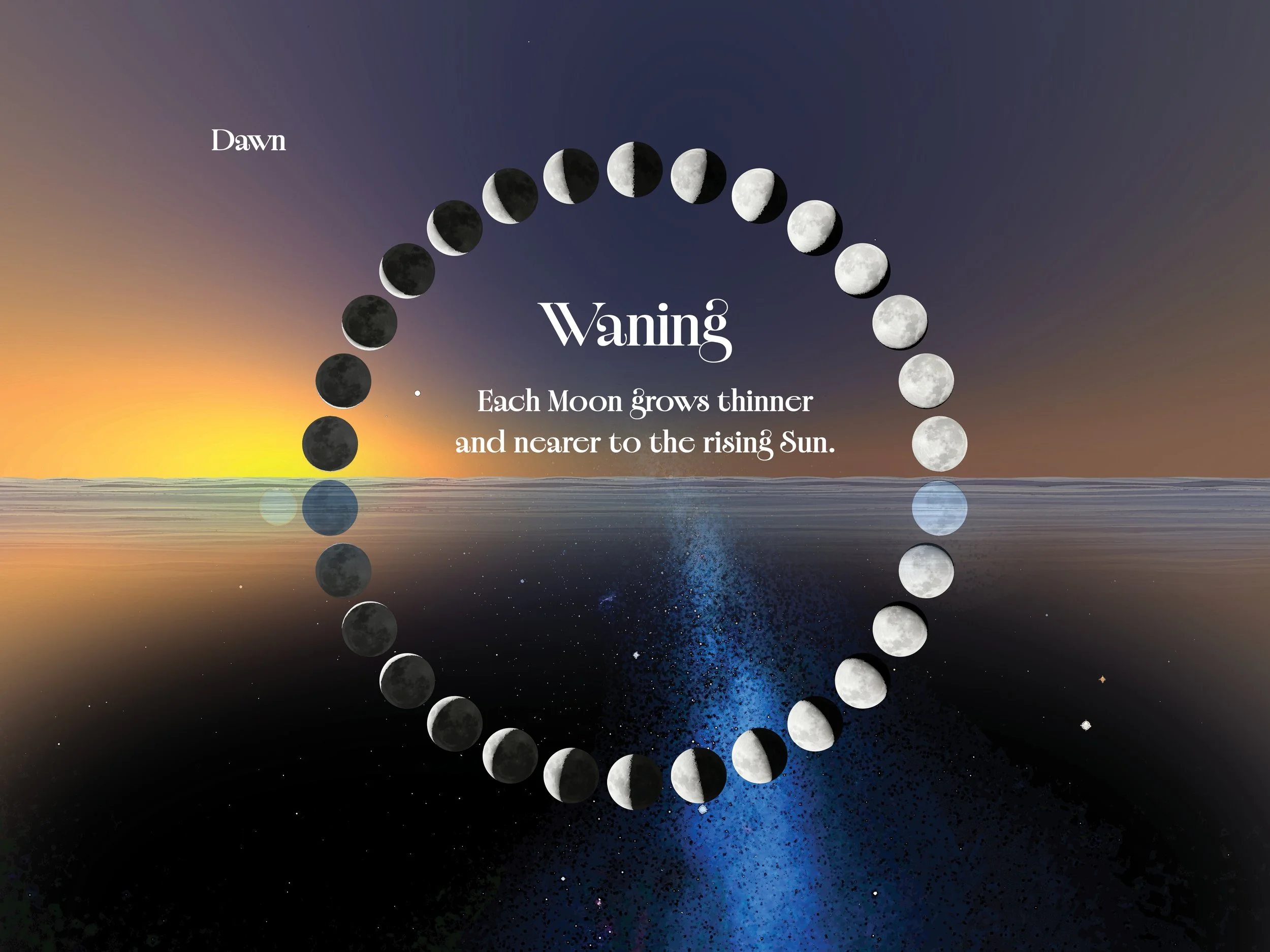
She is round
Each shade of her gibbous roundness is featured around mid cycle. While her first waxing Moon barely touched the twilight sky, her fullest gibbous shape spans the entire night. As her roundness wanes, she leaves twilight behind to reach further into the morning sky.
She is waning
The Moon shows us that it is not her nature to remain full longer than a night. She lives in a tidal flow so powerfully that she actually shapes them. As a companion to the Sun, she chooses to return. Everything is her choice. She has chosen to wane and in doing so she will leave the night sky to disappear into the rising Sun.
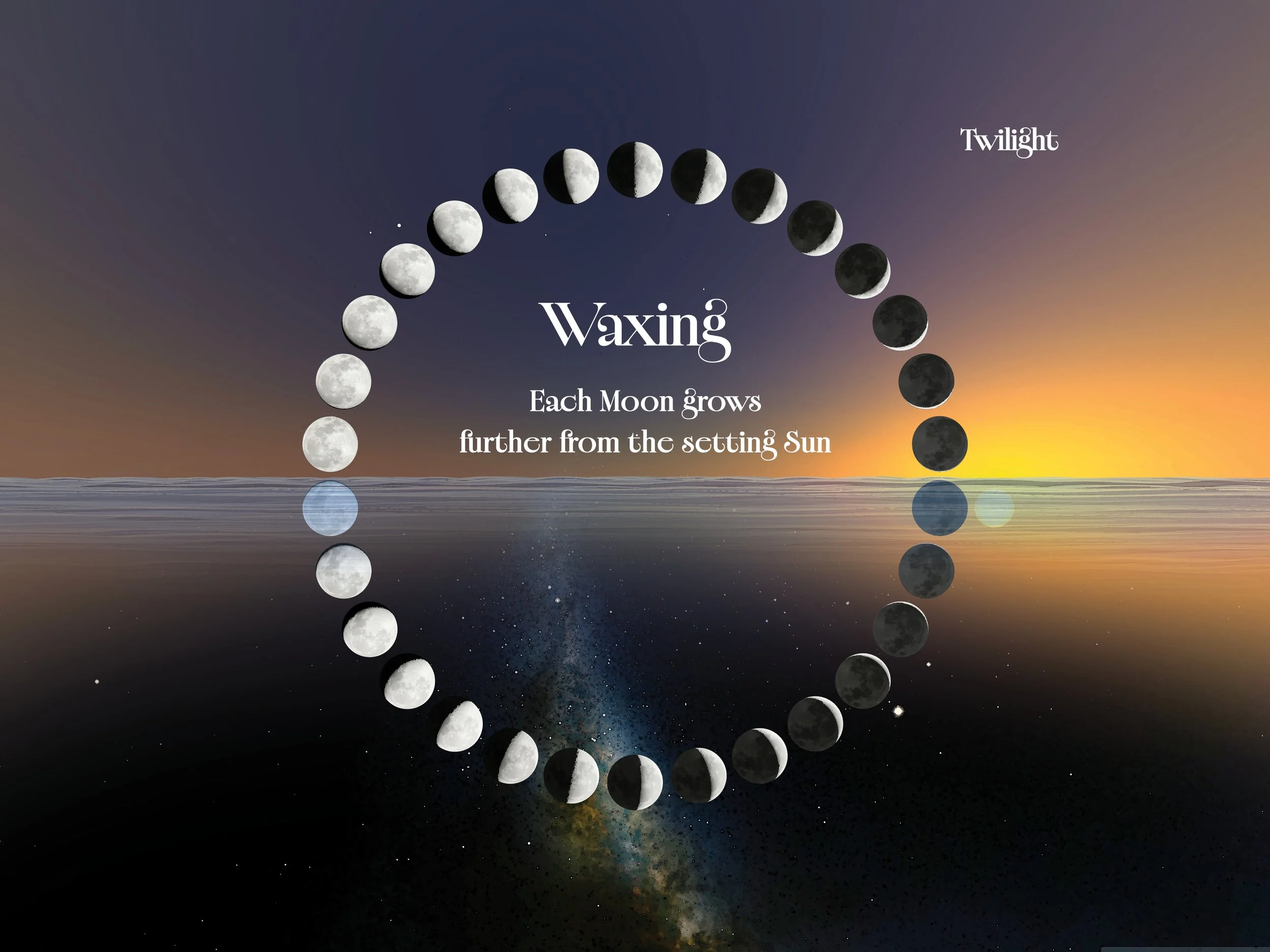
As she waxes
She grows away from
the setting Sun.
Each month we begin, truly begin, by finding her at twilight in the western sky.
In plain sight, we see that while the Sun rises in the east, she begins her cycle in the west.
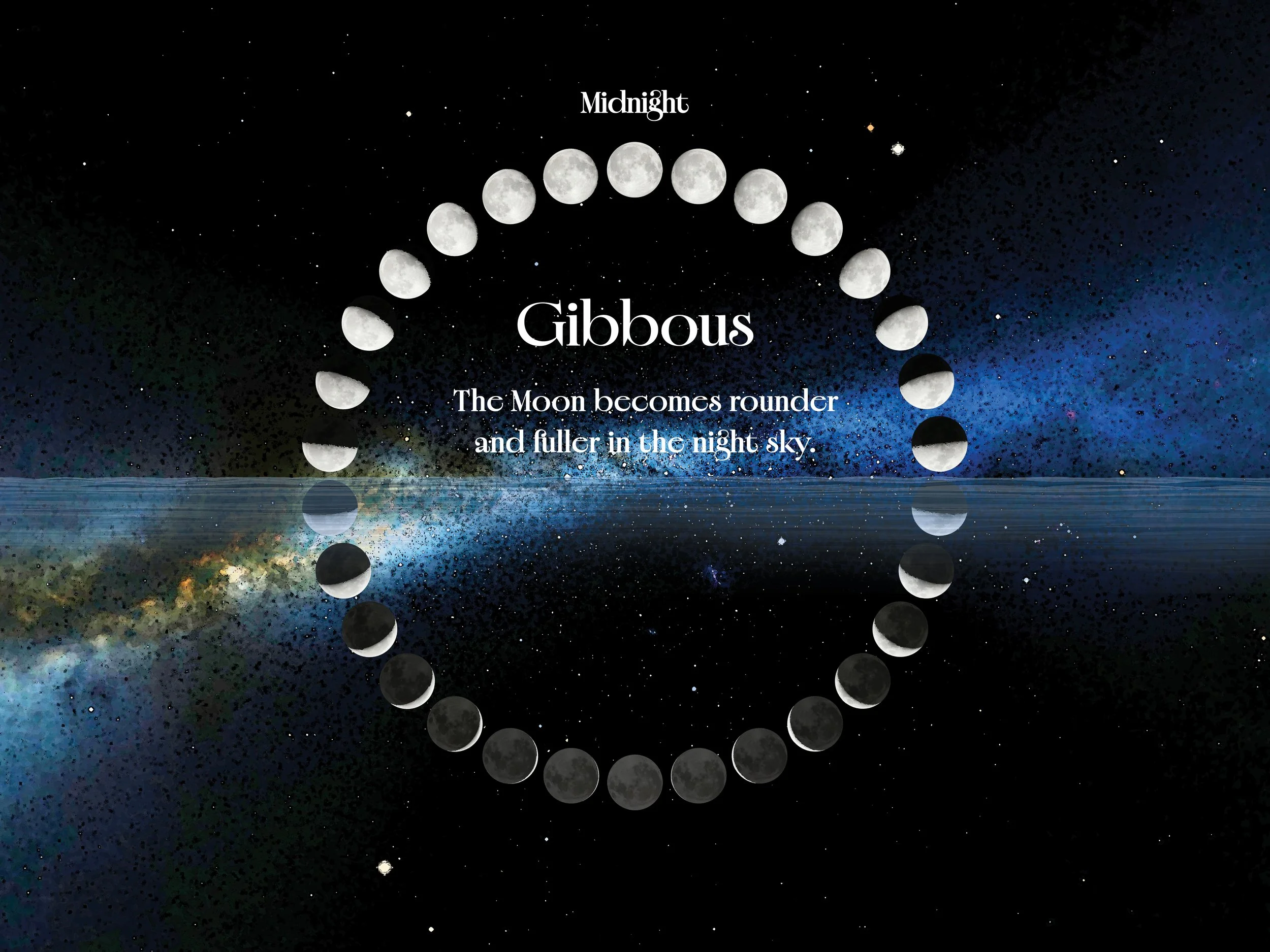
Her light fills the night sky.
She is Gibbous. She is round.
In her fullness she becomes equal in shape as the Sun. Together they balance both day and night.
What we see each month is that she travels the entire night sky only once. Before fullness she does not reach Sunrise. After fullness she begins to spend more and more time in the morning sky.